Rooibos Wellness Benefits: South Africa’s Own Plants
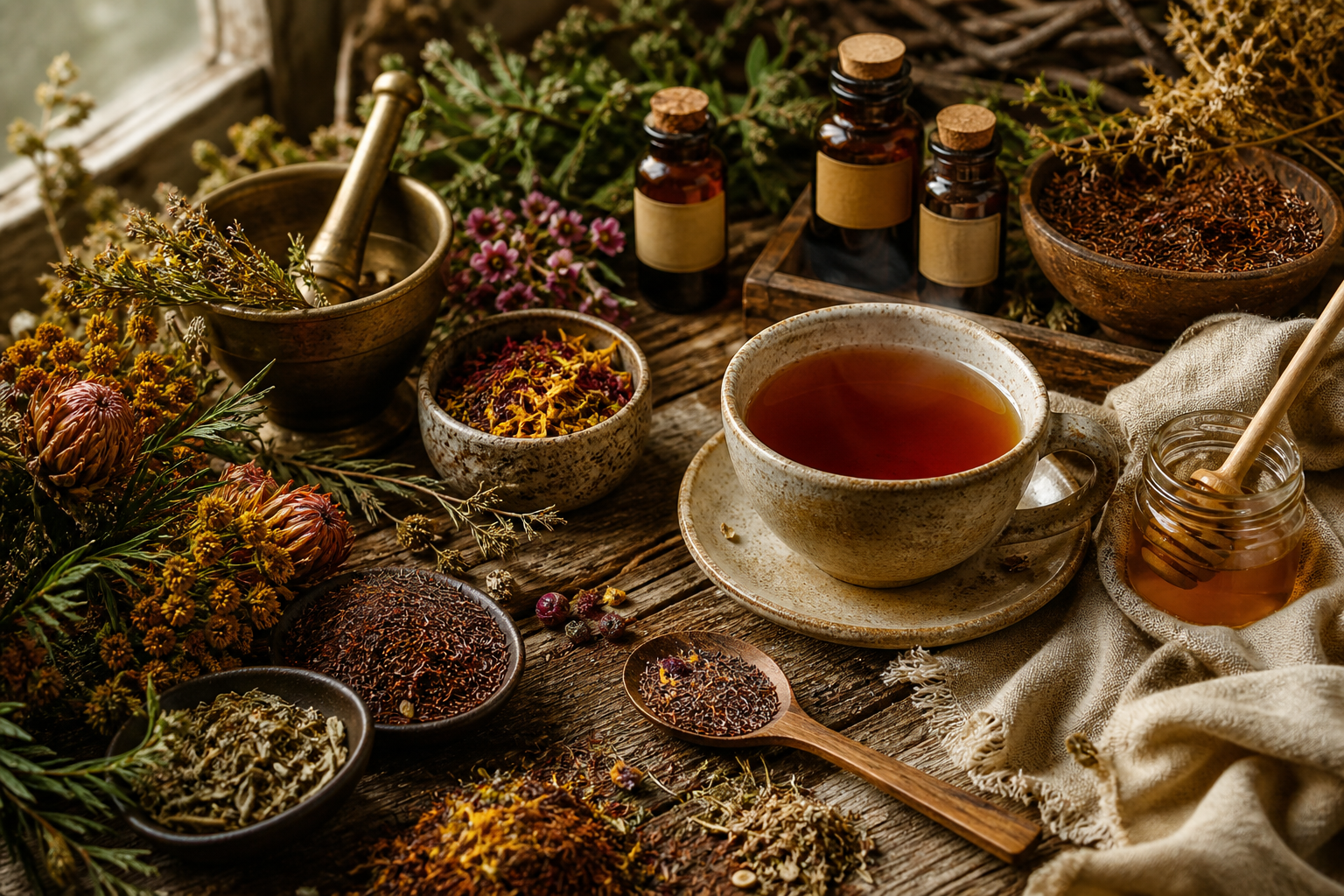
Rooibos and honeybush are among the most beloved plants in South Africa’s wellness pantry, bringing flavour, heritage, and gentle everyday nourishment to the cup.
Both herbs have deep roots in our landscape and culture, and both offer a comforting way to slow down, sip, and reconnect with simple rituals. Their appeal isn’t only about taste — it’s also about the rich plant compounds, the traditional use of indigenous South African herbs, and the ease of weaving them into daily life.
Rooibos wellness benefits in everyday life
Rooibos has long been a favourite for South Africans who want a naturally caffeine-free brew with a soft, rounded taste. It’s made from the leaves of Aspalathus linearis, a shrub native to the Cederberg region, and it has become one of the country’s best-known wellness exports.
When people talk about rooibos wellness benefits, they’re often referring to its gentle place in a balanced routine. Rooibos is widely appreciated for being easy to enjoy at any time of day, especially when a calming, non-stimulating drink feels right. Its naturally smooth profile also makes it easy to pair with milk, honey, lemon, or spices, depending on your mood.
Another reason rooibos stands out is its natural antioxidant content. You’ll often see the phrase rooibos antioxidants mentioned in wellness conversations, and for good reason: the plant contains a range of polyphenols that contribute to its unique botanical character. While the cup itself is simple, the plant behind it is beautifully complex.
Why rooibos is such a versatile staple
For many households, rooibos is less of a trend and more of a long-standing habit — one that supports steady, uncomplicated wellness.
Honeybush tea South Africa loves for flavour and comfort
Honeybush tea South Africa has embraced for generations comes from several species in the Cyclopia genus, which grow mainly in the Western and Eastern Cape. The name comes from the plant’s naturally honey-like scent and taste, which makes it feel a little softer and sweeter than rooibos.
Like rooibos, honeybush is caffeine-free and easy to include in a daily rhythm. Its flavour is often described as warmer, fuller, and more fragrant, which makes it appealing on its own or blended with rooibos for a richer cup. Some people enjoy it in the evening, while others prefer it as a daily no-fuss herbal brew.
Honeybush also belongs to the wider story of indigenous South African herbs that have been valued not only for taste, but for their role in traditional food and wellness cultures. These plants reflect a beautiful principle: the land often gives us what is both practical and pleasurable.
Ways to enjoy honeybush
Indigenous South African herbs with a living heritage
Rooibos and honeybush are often discussed together because they share more than geography. They are part of a broader plant heritage that includes many indigenous South African herbs, each with its own story, flavour, and place in local wellness traditions.
What makes these plants so special is that they’re not imported ideas placed onto South African life — they’re part of it. They grow in our soils, reflect our climate, and have been woven into the rhythms of home kitchens, family tables, and herbal routines for years.
This matters because wellness feels more grounded when it comes from familiar places. A cup of rooibos or honeybush can be a small but meaningful reminder that everyday nourishment doesn’t need to be complicated. Often, the best routines are the ones that are easy to repeat.
A few simple reasons local herbs remain popular
For anyone building a more natural pantry, these herbs are an elegant place to begin.
Brewing rooibos and honeybush well
How you brew a herb can change the entire experience. With rooibos and honeybush, the good news is that both are forgiving and easy to work with, even for beginners.
Start with freshly boiled water, then steep the leaves or teabags for several minutes. Rooibos generally becomes fuller and richer with a longer steep, while honeybush tends to release its sweetness quickly. If you like a stronger cup, simply let it sit a little longer rather than using more tea at once.
Easy brewing ideas
You can also use rooibos and honeybush in cooking. They work beautifully in poaching liquids, syrups, and even baked goods, where their warm flavour can add depth without heaviness.
Choosing quality herbal tea for your routine
When buying rooibos or honeybush, quality matters. Look for a fresh aroma, a clean ingredient list, and packaging that protects the herbs from light and moisture. Loose leaf tea often gives a fuller flavour, but teabags are convenient and can still be excellent if the product is well sourced.
It’s also worth paying attention to origin. South African-grown herbs carry a sense of place that many people value, especially when choosing wellness ingredients with a strong local story. Supporting these plants helps sustain the broader ecosystem of growers, harvesters, and small businesses who keep indigenous South African herbs in daily use.
If you enjoy building a more intentional home herbal shelf, you might also appreciate browsing complementary wellness products that fit a calm, balanced routine. For example, some readers like to pair a soothing evening cup with supportive products such as Tranquil Mind or Magnesium Herbal capsules as part of a broader self-care rhythm.
The goal isn’t perfection. It’s simply creating habits that feel pleasant enough to repeat.
A South African ritual worth keeping
Rooibos and honeybush remain special because they’re both practical and meaningful. They offer flavour, warmth, and a sense of local identity in a world that often feels overly complex. They also remind us that wellness can be built from small, steady choices: a good cup, a quiet moment, and a plant with a story worth knowing.
Whether you prefer the mellow earthiness of rooibos or the naturally sweet depth of honeybush tea South Africa is proud to call its own, both herbs deserve a place in a thoughtful pantry.
This content is for general wellness information only and is not intended as medical advice.
For more plant-led wellbeing ideas, explore the rest of our blog and discover more ways to bring South Africa’s herbal heritage into everyday life.
Read more about the plants we love on our [Herbs & Plants journal](/blog?category=herbs) — traditional botanicals explained simply.
Frequently Asked Questions
What makes rooibos such a popular wellness tea?+
Rooibos is popular because it’s naturally caffeine-free, has a smooth flavour, and fits easily into everyday routines. Many people also value its rooibos antioxidants and its strong South African heritage.
Is honeybush tea from South Africa?+
Yes, honeybush tea South Africa is known for comes from Cyclopia species that grow mainly in the Western and Eastern Cape. It has a naturally sweet, fragrant flavour and is widely enjoyed as a caffeine-free herbal brew.
Can rooibos and honeybush be enjoyed every day?+
Many people enjoy both as part of a daily routine because they’re gentle, caffeine-free, and easy to brew. They’re also simple to rotate depending on taste and the time of day.
What are some easy ways to use these herbs beyond tea?+
Rooibos and honeybush can be used in iced drinks, poaching liquids, syrups, and baking. Their warm flavours also blend well with cinnamon, vanilla, citrus peel, and other comforting ingredients.
Products Mentioned
Explore the products featured in this article