Fire Cider Recipe: Homemade Folk Tonic for Vitality
What is fire cider?
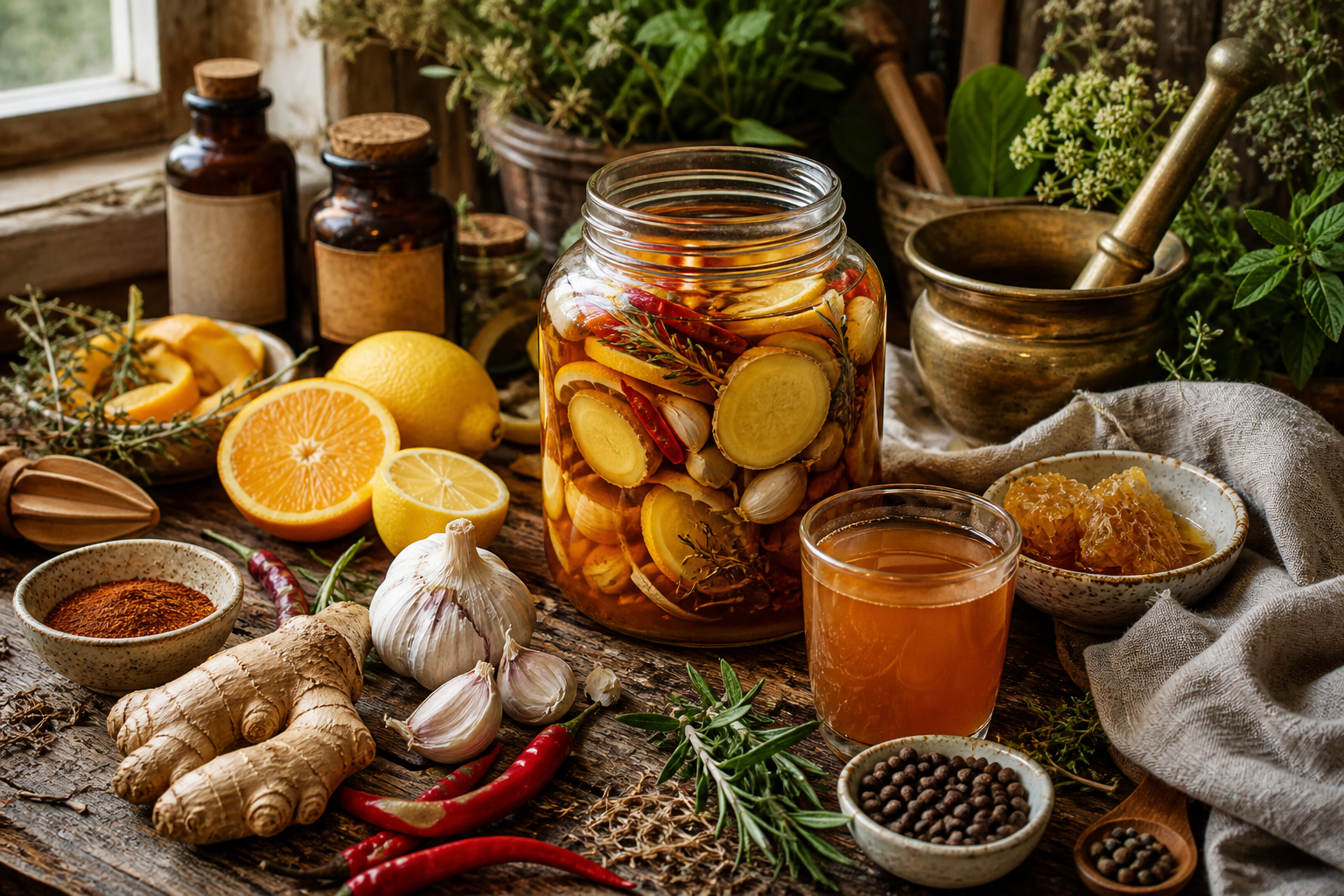
Fire cider is a traditional folk-style infusion made with apple cider vinegar, pungent roots, aromatics, herbs, and a little honey. It is best known as a bold, warming apple cider vinegar tonic with a lively flavour profile that fits beautifully into a seasonal wellness routine.
For a South African audience, it is also wonderfully practical. The ingredients are easy to source at local supermarkets, spice shops, or fresh produce markets, and the finished tonic can be stirred into warm water, taken by the spoonful, or used in salad dressings and marinades.
This classic fire cider recipe is less about strict rules and more about using kitchen ingredients in a thoughtful, time-honoured way. Think of it as a fragrant, tangy herbal tonic recipe that brings together heat, acidity, sweetness, and depth.
Why people love this apple cider vinegar tonic
The charm of fire cider is in its balance. The vinegar creates a sharp, bright base, while onion, garlic, ginger, and chilli add warmth and character. Honey rounds everything out, and herbs bring their own aromatic notes.
Here are a few reasons this tonic remains popular:
Many home cooks also appreciate that it feels both practical and comforting. A jar of fire cider sitting in the kitchen is a lovely reminder of slow food traditions and the value of making nourishing things at home.
Fire cider recipe: ingredients and method
This version is designed to be accessible, bright, and well balanced. It makes about 1 large jar.
Ingredients
Method
1. Sterilise a clean glass jar and let it dry fully.
2. Add the onion, garlic, ginger, turmeric, chilli, lemon, orange, herbs, peppercorns, and cinnamon to the jar.
3. Pour in the apple cider vinegar until all ingredients are fully covered. Use a non-metal lid or place baking paper between the jar and a metal lid.
4. Seal the jar and store it in a cool, dark cupboard for 2 to 4 weeks.
5. Shake the jar gently once a day to help the flavours mingle.
6. After steeping, strain through a fine sieve or muslin cloth.
7. Stir in honey to taste.
8. Bottle the finished tonic in a clean glass jar or bottle and store it in the fridge.
If you prefer a stronger flavour, let the ingredients infuse a little longer. If you enjoy a softer profile, add more honey at the end.
South African variations to try
One of the pleasures of making a fire cider recipe at home is adapting it to local tastes and seasonal produce. Here in South Africa, there are plenty of ingredients that can add depth and personality.
Easy local swaps and additions
For those looking for a fire cider tonic South Africa version with a milder finish, simply reduce the chilli and add a touch more honey. The aim is not intensity for its own sake, but a flavour that feels enjoyable and easy to use regularly.
How to enjoy it in everyday life
A homemade tonic like this can be folded into daily routines in simple, culinary ways. There is no need to overcomplicate it.
Serving ideas
Because it is made with vinegar and aromatic ingredients, a little goes a long way. Start with a modest serving and adjust according to taste.
If your kitchen routine already includes herbal teas, broths, and fermented foods, this tonic can fit in naturally alongside them. It is another useful tool in a warm, food-first approach to everyday wellbeing.
Storage, safety, and practical tips
Homemade tonics are easiest to enjoy when they are prepared and stored with care.
Helpful tips
A few notes on flavour: garlic and onion mellow with time, while ginger and chilli stay lively. Honey can be added after straining so you can adjust sweetness precisely. If the mixture looks cloudy, that is normal for a traditional apple cider vinegar tonic.
For people who enjoy building a broader natural wellness cupboard, ingredients like propolis 50ml or quercetin synergy complex 60 capsules can also be part of a seasonal routine, depending on personal preferences and product suitability.
A traditional tonic worth making again
At its best, fire cider is a reminder that simple ingredients can be both useful and enjoyable. It brings together the sharpness of vinegar, the warmth of roots and spices, and the comfort of making something by hand.
This fire cider recipe is easy to adapt, easy to store, and easy to weave into meals and drinks. Whether you are curious about an apple cider vinegar tonic, looking for a practical herbal tonic recipe, or simply enjoying the rhythm of home-crafted wellness, this is a lovely place to begin.
Explore more seasonal recipes and natural living ideas on the Medicine Like Food blog.
Find more nourishing ideas on our [Recipes page](/blog?category=recipes) — simple, wholesome creations for everyday wellness.
Frequently Asked Questions
How long should fire cider steep?+
A steeping time of 2 to 4 weeks is common. A longer infusion tends to create a deeper, more rounded flavour.
Can I make this fire cider recipe without chilli?+
Yes. The chilli can be left out entirely, or reduced for a gentler finish. The tonic will still have plenty of flavour from ginger, garlic, citrus, and herbs.
What is the best way to store homemade fire cider?+
After straining, keep it in a clean glass bottle or jar in the fridge. A cool, dark cupboard is suitable during the steeping stage.
How can I use a fire cider tonic South Africa style?+
It works well in warm water, salad dressings, marinades, or sparkling water. Local citrus, thyme, and rosemary can make the flavour feel especially at home in South African kitchens.
Products Mentioned
Explore the products featured in this article