Fire Cider Recipe for Vitality and Everyday Support
A warming kitchen tonic can be a lovely way to bring seasonal ingredients into everyday wellness.
Fire cider has long been part of folk herbal traditions, and it remains popular because it is simple, vibrant, and deeply ingredient-led. This fire cider recipe combines apple cider vinegar, aromatics, citrus, herbs, and a little sweetness into an apple cider vinegar tonic that feels rooted in the kitchen rather than the pharmacy.
What is fire cider?
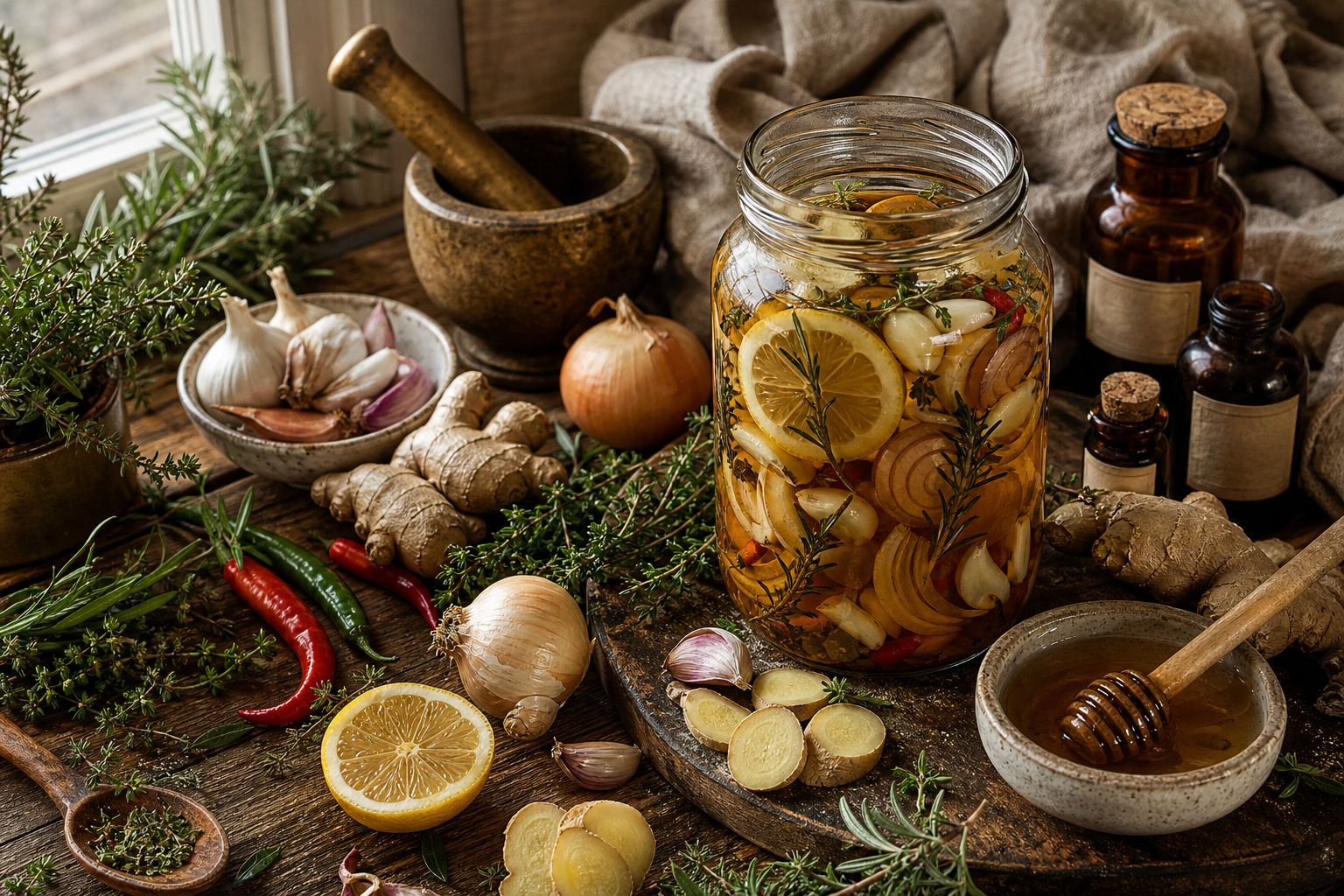
Fire cider is a traditional herbal tonic recipe made by infusing apple cider vinegar with pungent ingredients such as ginger, garlic, onion, chilli, and warming herbs. The result is bold, tangy, and spicy, with a flavour profile that many people enjoy as part of a daily ritual.
In South Africa, interest in a fire cider tonic South Africa style often comes from home cooks and natural wellness enthusiasts who enjoy making pantry-based tonics from familiar ingredients. It is a practical, affordable, and flexible recipe that can be adapted to what’s in season and what’s already in the kitchen.
The beauty of fire cider is that it doesn’t need to be complicated. A few fresh ingredients, a clean jar, and time are usually enough.
Why people make a fire cider recipe
Fire cider is loved because it feels both traditional and nourishing. It brings together ingredients often used in seasonal cooking, including:
Many people enjoy a small spoonful of fire cider as part of a morning or mealtime routine, especially during cooler months. Others use it in salad dressings, marinades, or sparkling water for a tangy herbal drink.
Fire cider recipe ingredients
Ingredients
For one medium jar, you will need:
Optional additions:
Equipment
How to make fire cider tonic
Method
1. Add the onion, garlic, ginger, chilli, citrus peel, rosemary, thyme, and any optional spices to a clean glass jar.
2. Pour in enough apple cider vinegar to completely cover the ingredients. Leave a little space at the top of the jar.
3. Use a clean spoon to release any trapped air bubbles, then seal the jar tightly.
4. Store the jar in a cool, dark cupboard for 2 to 4 weeks. Shake it gently once a day if you remember.
5. Taste after 2 weeks. The longer it sits, the deeper and more rounded the flavour becomes.
6. Strain the liquid through a fine sieve or muslin cloth into a clean bowl.
7. Stir in raw honey to taste while the liquid is at room temperature.
8. Bottle your finished tonic and store it in the fridge or another cool place.
This simple process is what makes fire cider so appealing: it is low-effort, adaptable, and wonderfully aromatic.
How to enjoy it in everyday wellness
A fire cider tonic is usually taken in small amounts because of its intensity. Many people start with 1 teaspoon and increase to 1 tablespoon if the flavour suits them.
Here are a few easy ways to use it:
Because it is vinegar-based, fire cider has a sharp edge that softens nicely with honey or citrus. If you prefer a milder flavour, begin with a small amount and adjust the sweetness to your liking.
Tips for making the best fire cider South Africa style
South African kitchens are full of beautiful ingredient possibilities, so this recipe can be shaped around local seasons and preferences.
For a softer, more rounded flavour, you can add a little more honey after straining. For a stronger, sharper version, leave out the sweetener entirely and use it as a cooking ingredient instead.
Helpful storage and serving notes
Once strained, your fire cider tonic should be kept in a sealed glass bottle or jar. A refrigerator is ideal, although a cool pantry can also work for short-term storage.
A few simple notes make a difference:
This kind of tonic is best treated as a kitchen staple rather than a complicated routine. It can be part of breakfasts, lunch dressings, or evening cooking, depending on what feels right for your rhythm.
A gentle tradition worth keeping
Homemade tonics invite us to slow down and work with whole ingredients. Fire cider is a good example: simple, bold, and rooted in everyday pantry wisdom. Whether you make it for its flavour, its tradition, or its place in a seasonal wellness routine, it brings a comforting sense of craft back into the kitchen.
If you enjoy traditional herbal living, you may also like exploring supportive products such as Bee Complete, Zinc Herbal, or Vitamin C Herbal as part of a broader wellness cupboard. They can pair beautifully with a balanced lifestyle, thoughtful meals, and restorative daily habits.
This content is for general wellness information only and is not intended as medical advice.
If this fire cider recipe inspires more kitchen experiments, explore more nourishing ideas on the Medicine Like Food blog.
Find more nourishing ideas on our [Recipes page](/blog?category=recipes) — simple, wholesome creations for everyday wellness.
Frequently Asked Questions
How long should fire cider steep?+
A good starting point is 2 to 4 weeks in a cool, dark cupboard. The flavour becomes deeper and more rounded with time.
Can fire cider be made without honey?+
Yes. Honey is optional and mainly adds softness to the flavour. Many people leave it out entirely, especially if they prefer a sharper tonic.
What can be used instead of chilli?+
If a milder flavour is preferred, leave out the chilli and lean more on ginger, rosemary, lemon peel, and black pepper for warmth and aroma.
How is a fire cider tonic used in cooking?+
It works well in salad dressings, marinades, soups, and sparkling drinks. A small amount is usually enough because the flavour is quite bold.
Products Mentioned
Explore the products featured in this article