
Balanced Plate Nutrition: Protein, Fibre, and Balance
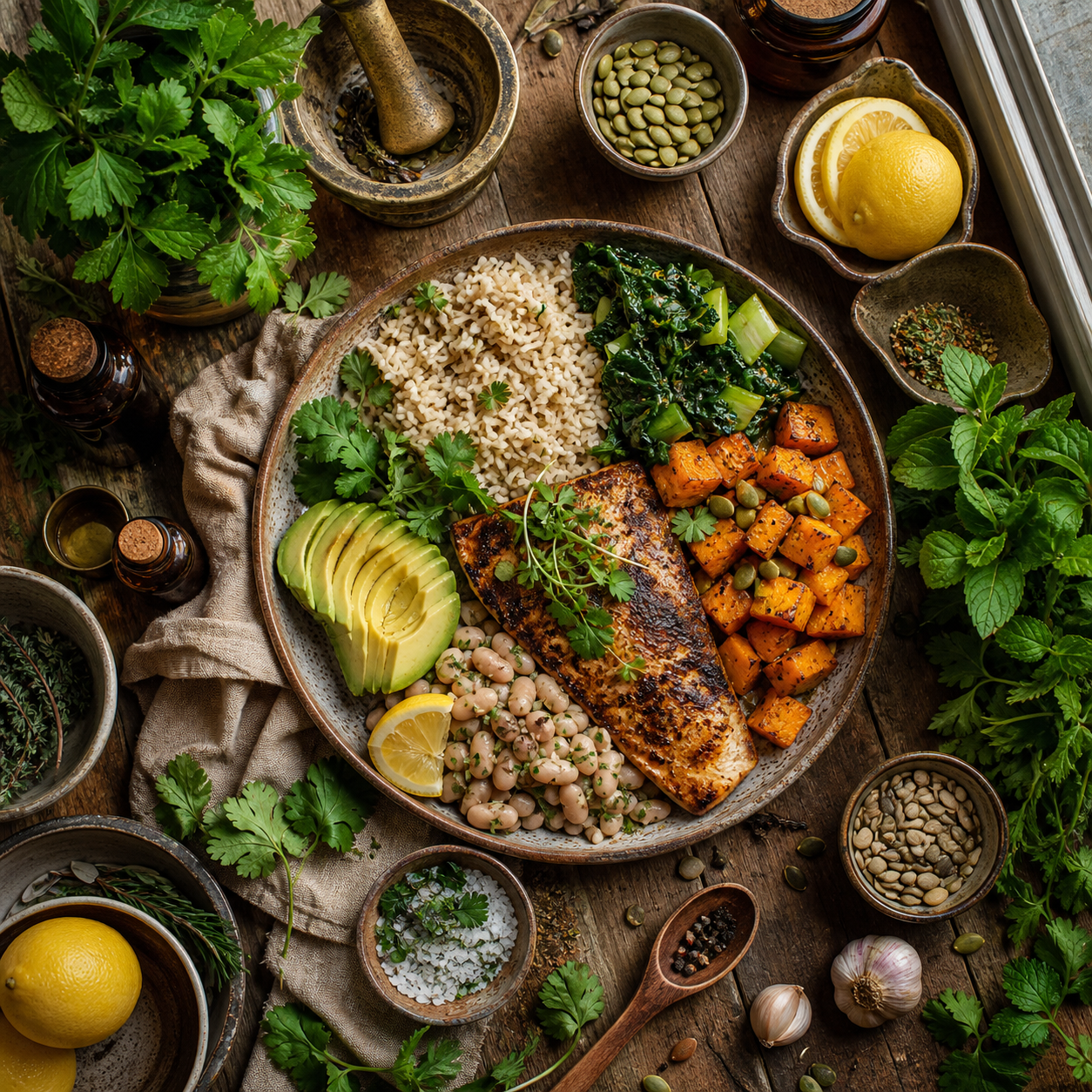
Feeling energised often starts with what’s on the plate, and balance is usually simpler than it sounds.
A genuinely balanced plate isn’t about rules, restriction, or perfection. It’s about bringing together protein, fibre, healthy fats, and colourful plants in a way that feels satisfying and easy to repeat. For many households, that’s the heart of balanced plate nutrition: practical, flexible, and rooted in everyday meals rather than trends.
What balanced plate nutrition really means
At its core, balanced plate nutrition is a way of assembling meals so they offer more than just quick fuel. Instead of building a plate around one dominant ingredient, the idea is to include a few key elements that work well together.
A simple balanced plate often looks like this:
This style of eating isn’t fancy, and it doesn’t need to be. It simply helps meals feel more complete, which can support steady energy, comfort, and a sense of ease around food.
Why protein and fibre matter together
Protein and fibre balance is one of the most useful foundations for everyday balanced eating. Protein brings structure to the meal, while fibre adds bulk, texture, and a more gradual release of energy from plant foods.
That combination can make a meal feel more satisfying and less rushed. It also makes it easier to build a plate that doesn’t rely on one ingredient doing all the work.
Protein brings steadiness
Protein appears in both animal and plant foods, and it plays a starring role in meals that feel substantial. Think:
When protein is included regularly, meals often feel more grounded and complete. That’s especially helpful on busy South African days when breakfast, lunch, and supper can all happen on the move.
Fibre adds fullness and flow
Fibre is found in plant foods, especially vegetables, fruit, legumes, whole grains, nuts, and seeds. It brings welcome texture to meals and helps build a more varied plate.
Easy ways to add more fibre include:
When protein and fibre are paired well, meals tend to feel more balanced, more interesting, and more nourishing overall.
Building a healthy plate South Africa can use every day
A healthy plate South Africa style doesn’t need imported ingredients or complicated meal plans. Some of the most nourishing plates are made from familiar foods found in local kitchens, supermarkets, markets, and spaza shops.
Here are a few practical combinations:
Breakfast ideas
Lunch ideas
Supper ideas
A useful question at any mealtime is: what can be added for colour, what can be added for protein, and what can be added for fibre? That one habit can gently reshape everyday meals without making them feel complicated.
Everyday balanced eating without overthinking it
Everyday balanced eating works best when it’s realistic. It doesn’t need to look identical at every meal, and it certainly doesn’t require a perfect plate every time.
A few steady habits can make a big difference over time:
This kind of routine supports consistency because it feels natural. It’s less about strictness and more about rhythm. When food choices become easier to repeat, healthy habits usually stick more comfortably.
Simple meal-building tips that keep balance in view
Balanced plate nutrition becomes much easier when a few small shortcuts are part of the week.
Keep a few anchor foods on hand
Try stocking:
Use the plate as a visual guide
Instead of counting or measuring every bite, let the plate do some of the work. That makes meal planning feel more relaxed and more intuitive.
Build flavour, not just structure
A balanced meal doesn’t have to be bland. In fact, flavour helps food feel satisfying. Fresh herbs, roasted garlic, curry spices, cumin, cinnamon, ginger, and lemon all help simple meals feel special.
A balanced plate is not only about nutrients. It’s also about pleasure, ease, and meals that suit real life.
When a small supplement may fit into a broader routine
Food is the foundation, and a supplement can sometimes sit alongside it as part of a wider wellness routine. For example, **Magnesium & Zinc 60 capsules** can be a simple mineral blend to support everyday nourishment, balance, and overall wellbeing when used thoughtfully as part of a broader lifestyle.
That said, supplements are never a substitute for a well-built plate. They work best as a quiet extra, while meals continue to do the heavy lifting.
Balanced plate nutrition is ultimately about keeping things steady, enjoyable, and practical. A plate with protein, fibre, colour, and good flavour is often more satisfying than a plate built around one note alone.
This content is for general wellness information only and is not intended as medical advice.
If this approach feels helpful, explore more of our nutrition and wellness articles on the Medicine Like Food blog for simple ideas that fit beautifully into everyday life.
Explore more on our [Nutrition blog](/blog?category=nutrition) — practical, everyday guidance on food and nutrients.
Frequently Asked Questions
What is balanced plate nutrition?+
Balanced plate nutrition is a simple way of building meals with protein, fibre-rich foods, colourful vegetables, and healthy fats so the plate feels more complete and nourishing.
How do protein and fibre work together in meals?+
Protein brings structure and satisfaction, while fibre adds texture, variety, and plant-based nourishment. Together, they help meals feel more balanced and steady.
What does a healthy plate South Africa style look like?+
A healthy plate South Africa style often includes familiar foods such as eggs, beans, samp, brown rice, vegetables, yoghurt, fish, chicken, and seasonal fruit.
How can everyday balanced eating stay practical?+
Keeping a few staple foods ready, using leftovers well, and adding colour, protein, and fibre to each meal can make everyday balanced eating feel simple and sustainable.
Products Mentioned
Explore the products featured in this article