Adaptonerve: A Closer Look at the Nerve and Stress Support Formula
# Adaptonerve: A Closer Look at the Nerve and Stress Support Formula
When stress becomes a constant companion, the nervous system bears the brunt — and that's exactly where a formula like Adaptonerve is designed to step in. Combining adaptogenic herbs with traditional nervines, Adaptonerve is formulated to support both the body's long-term stress resilience and the nervous system's day-to-day need for calm.
The Combination Explained
Adaptonerve brings together two distinct but complementary categories of herbs: **adaptogens** and **nervines**. Understanding why these two groups are combined helps explain what makes this formula more than the sum of its parts.
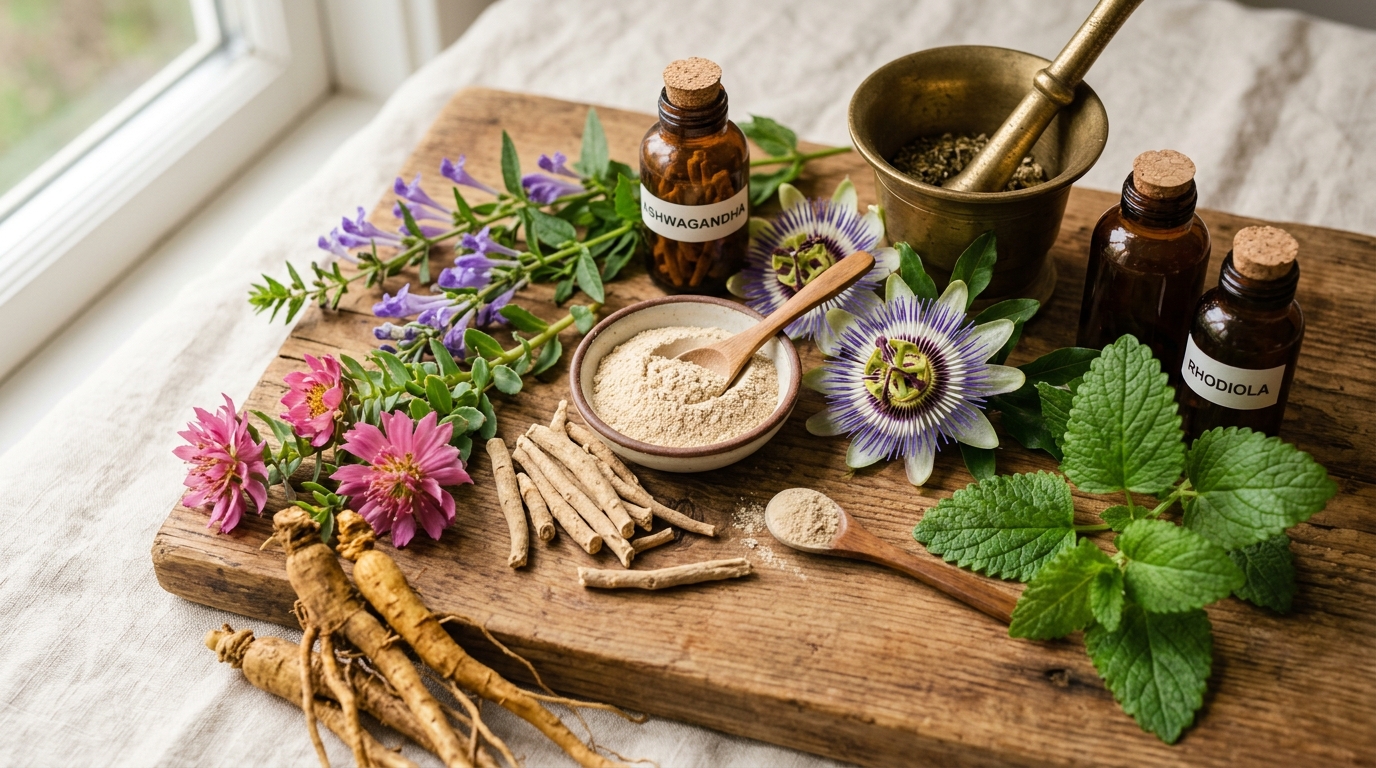
**Adaptogens** — such as Ashwagandha (*Withania somnifera*) and Rhodiola (*Rhodiola rosea*) — work at a deeper physiological level. They help regulate the hypothalamic-pituitary-adrenal (HPA) axis, the body's central stress-response system, and support the normalisation of cortisol over time. Ashwagandha is traditionally used as a tonic nervine: calming, grounding, and supportive of sleep. Rhodiola, by contrast, is more energising — traditionally used to combat fatigue and support mental performance under pressure.
**Nervines** — such as Skullcap (*Scutellaria lateriflora*), Passionflower (*Passiflora incarnata*), Lemon Balm (*Melissa officinalis*), and Valerian (*Valeriana officinalis*) — act more directly on the central and peripheral nervous systems. They are traditionally used to ease nervous tension, quiet a racing mind, and support restful sleep. Where adaptogens build resilience over weeks, nervines offer more immediate support for acute stress and tension.
Together, this dual approach addresses both the root causes of stress dysregulation and its immediate symptoms — a combination that herbalists have long favoured for nervous exhaustion and burnout.
What It's Used For
Adaptonerve is traditionally used to support:
This formula is generally considered suitable for adults experiencing the effects of modern chronic stress. As with all herbal formulas, consistent use over several weeks tends to yield the most meaningful results, as adaptogens in particular build their effects gradually.
Research Roundup
The science behind the key herbs in Adaptonerve is growing, though it's worth noting that much of the research is still in early or intermediate stages.
**Ashwagandha** is among the most clinically studied adaptogens. A 2026 randomised, double-blind, placebo-controlled trial published in *Trials* (Springer) found that both a multi-herb adaptogen formula and standalone Ashwagandha root extract significantly reduced Perceived Stress Scale (PSS) scores over 60 days, alongside improvements in sleep quality, anxiety, and mood. A 2024 review in *NutraIngredients* evaluating over 70 human clinical trials confirmed meaningful relief from stress-related symptoms, with a generally favourable safety profile.
**Rhodiola rosea** has been shown in multiple studies to modulate monoamine neurotransmitters — including serotonin, dopamine, and norepinephrine — and to support brain-derived neurotrophic factor (BDNF), a protein involved in neuroplasticity. Research consistently associates it with reduced fatigue and improved mental performance under stress, though most studies are of short duration (4–12 weeks).
**Skullcap** (*Scutellaria lateriflora*) was evaluated in a crossover clinical trial at the University of Westminster. While it did not significantly reduce anxiety scores on standardised scales, it showed a lasting positive effect on overall mood — and notably, without the sedative side effects common to pharmaceutical anxiolytics. Researchers suggested further study in clinical anxiety populations is warranted.
**Lemon Balm** has been the subject of a 2024 double-blind randomised clinical trial demonstrating significant improvements in subjective sleep quality using a phytosome (enhanced-bioavailability) extract. Its mechanisms involve interaction with GABAergic, serotonergic, and cholinergic pathways — the same systems targeted by many conventional sleep and anxiety medications.
**Passionflower** (*Passiflora incarnata*) has shown statistically significant reductions in stress and sleep disturbance scores in recent clinical research, with a 2024 study (PMC11026993) supporting its role in managing stress-related symptoms.
It's important to note that most of this research involves individual herbs rather than the combined formula. Synergistic effects between herbs are plausible but less well-studied in controlled trials.
Available On Our Site
If you're looking to explore this formula or its key ingredients individually, you can find **Adaptonerve** directly in our shop — this is the complete formula combining adaptogenic and nervine herbs in one product. For those who prefer to work with individual herbs, **Ashwagandha Extract Capsules Concentrate 15:1** and **Skullcap Powder** are also available, allowing you to go deeper into specific aspects of nervous system support. For broader nervous system care, **Nervepro** offers full support for calming an overworked nervous system.
Safety & Disclaimer
*This article is for informational purposes only and does not constitute medical advice. Always consult a qualified healthcare provider before starting any new supplement, particularly if you are pregnant, breastfeeding, taking prescription medications, or managing a diagnosed health condition.*
**Known interactions and contraindications to be aware of:**
If you experience any adverse effects, discontinue use and consult a healthcare professional.